Aevomenta.
Stay strong thinking.
Keep cognitive practice active, structured, and visible at every age. Aevomenta brings memory, attention, processing-speed, and spatial tasks into one personal adaptive route.
29
Adaptive exercises
6
Cognitive Domains
68
Scientific research
My daily route
Peripheral Focus
Attention and field of view
Visual trail
Working memory
A strong brain does not require promises, but regular training.
Cognitive performance changes with practice, focus, sleep, and context. Record it under consistent conditions, build from your own baseline, and make progress you can see.
Difficulties with names
It becomes difficult to quickly remember the name of a familiar person, the name of an object, or the details of yesterday's conversation.
Distracted attention
Attention depletes more quickly, making it more difficult to ignore noise and distractions when reading or working.
Multitasking
It is more difficult to keep several tasks in mind at the same time and switch between different instructions.
Speed reduction
It takes noticeably longer to learn new information or understand a complex document.
Voltage on the way
An unfamiliar driving or walking route causes stress and requires increased energy expenditure.
Repeated clarifications
You have to repeatedly re-read long articles or check with your interlocutors about the details of assignments.
Aevomenta builds a system chain:
1. Measure → 2. Select the load → 3. Exercise → 4. Track → 5. Adjust
Why Aevomenta is a structured practice system
Move beyond random puzzles. Aevomenta uses your task performance to keep each practice session focused, appropriately challenging, and easy to continue.
Personal route (Aevomenta Compass)
The algorithm uses accuracy, response time, self-reported fatigue, regularity, selected goals, and authorized support settings to create one clear sequence for the day.
- ✓ Selection without unnecessary selections
- ✓ Taking into account individual goals
- ✓ Balance of workload and rest
Adaptive complexity (Aevomenta Adapt)
Tasks adjust during practice. Too little challenge loses focus; too much creates friction. Adapt keeps the session inside a workable range.
What Adapt regulates:
29 Exercises in 6 Key Domains
Structured practice across six task domains—from everyday memory exercises to spatial-orientation challenges.
- ✓ Memory and Attention
- ✓ Speed and Flexibility
- ✓ Space and Society
Try exercise simulators
Evaluate the performance of the simulators directly on the page. Below are demos of three of Aevomenta's 29 adaptive exercises.
Peripheral Focus
Visual field width and detection speed training
Instructions:
Click "Start Game". Look at the red center. A flash will appear in the side zone. Quickly click on it!
6 Aevomenta Training Areas
The app covers all critical brain domains for everyday life.
Memory
Practice with visual, auditory, and episodic-memory tasks involving names, faces, and instructions.
- • Visual and audio chains
- • Household lists and tasks
- • Associations: Person - Name

Attention
Practice sustaining focus, working through distraction, and tracking multiple objects.
- • Maintaining concentration
- • Control of impulsive reactions
- • Distributed Focus

Speed of thinking
Practice recognizing visual and auditory stimuli under clear, measured time constraints.
- • Fast visual scanning
- • Distinguishing speech sounds
- • Reaction under time pressure

Flexibility of thinking
Practice working-memory, response-control, and rule-switching tasks.
- • N-Back trainings
- • Fast task switching
- • Adaptation to change

Space
Mental rotation of objects, working with maps, landmarks and dynamic road scenes.
- • Orientation by landmarks
- • Mental rotation of shapes
- • Dynamic road scenes
Social perception
Remembering faces, emotions, context of communication and facts about people for a confident social life.
- • Recognition of microexpressions
- • Remembering the context of a conversation
- • Retention of social details
Created for people, not IT developers
We designed the Aevomenta interface with the needs of adult users and people with low vision in mind. No fuss or small print.
Large text and buttons
High contrast and clear readability of all elements.
Voice instructions
Possibility to listen to the rules before the start.
One task per screen
No visual clutter or pop-up ads.
Offline mode (PWA)
Study on your smartphone, tablet or PC without the Internet.
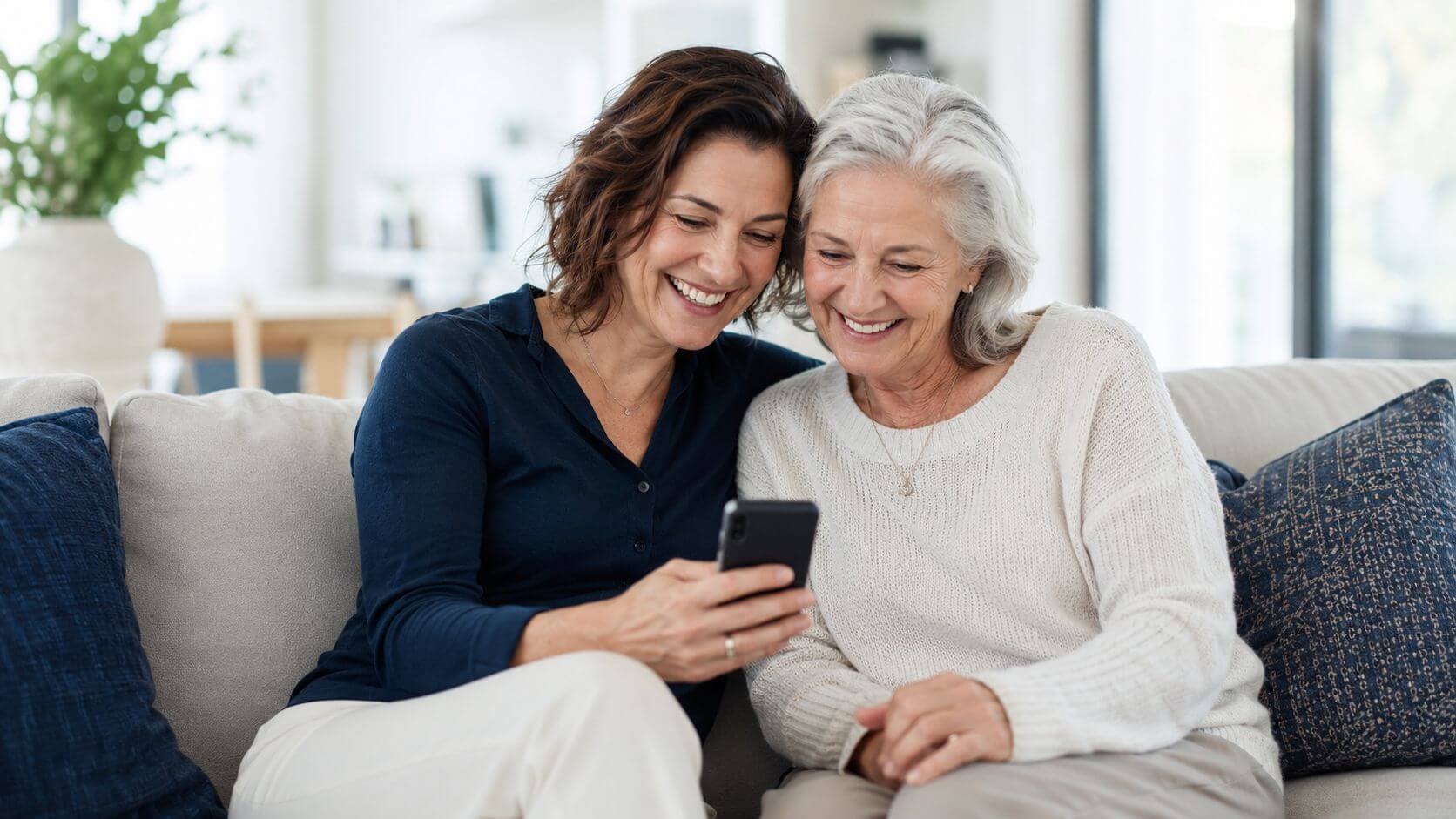
Aevomenta Circle
Caring for loved ones without violating privacy
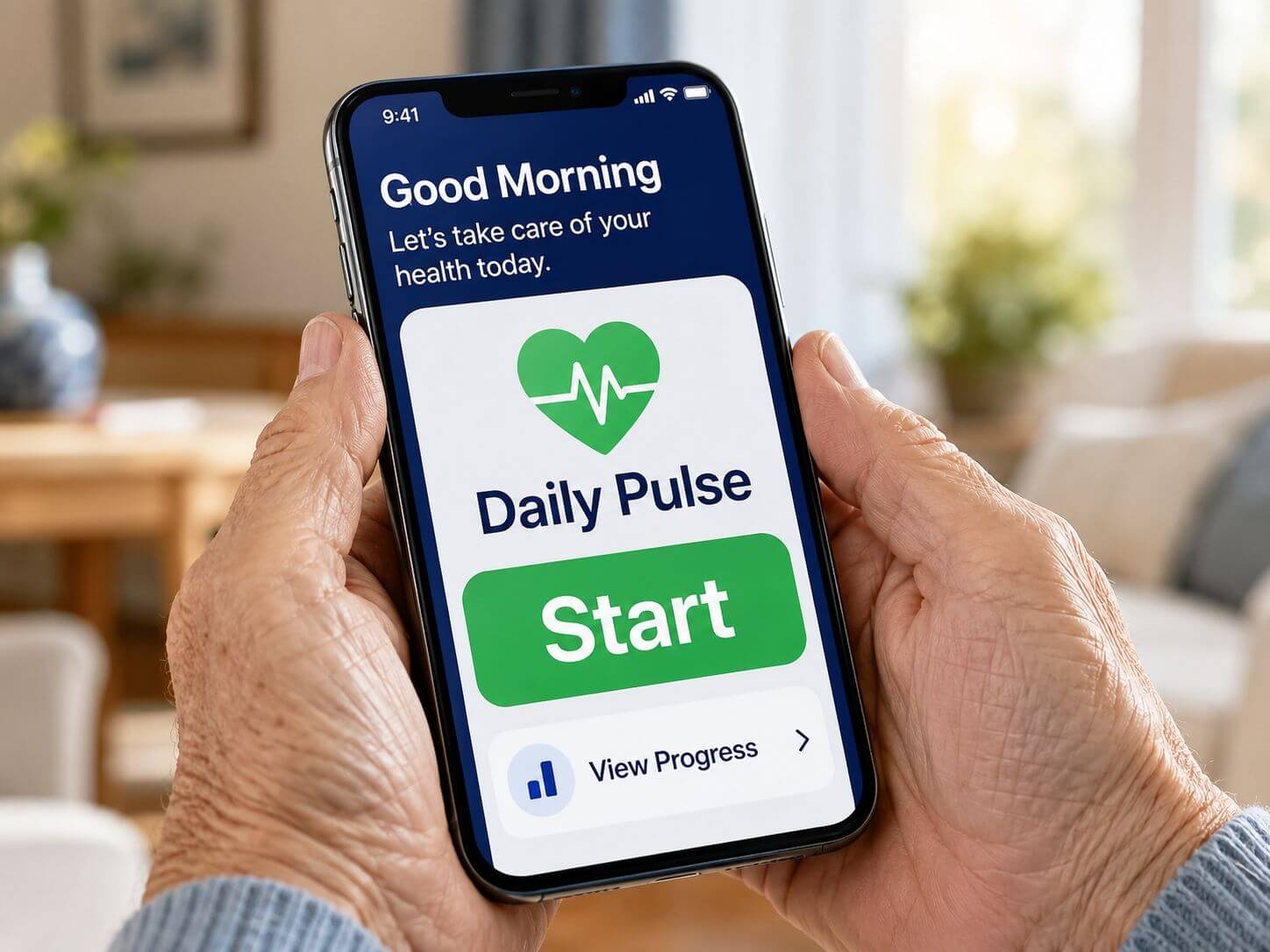
Involve a relative or assistant. He will be able to maintain the regularity of classes, see the fact of fulfilling the daily norm and congratulate him on his victories.
- ✓ Class reminders
- ✓ Notification in case of long absence
- 🔒 Detailed results stay private unless the user explicitly shares them
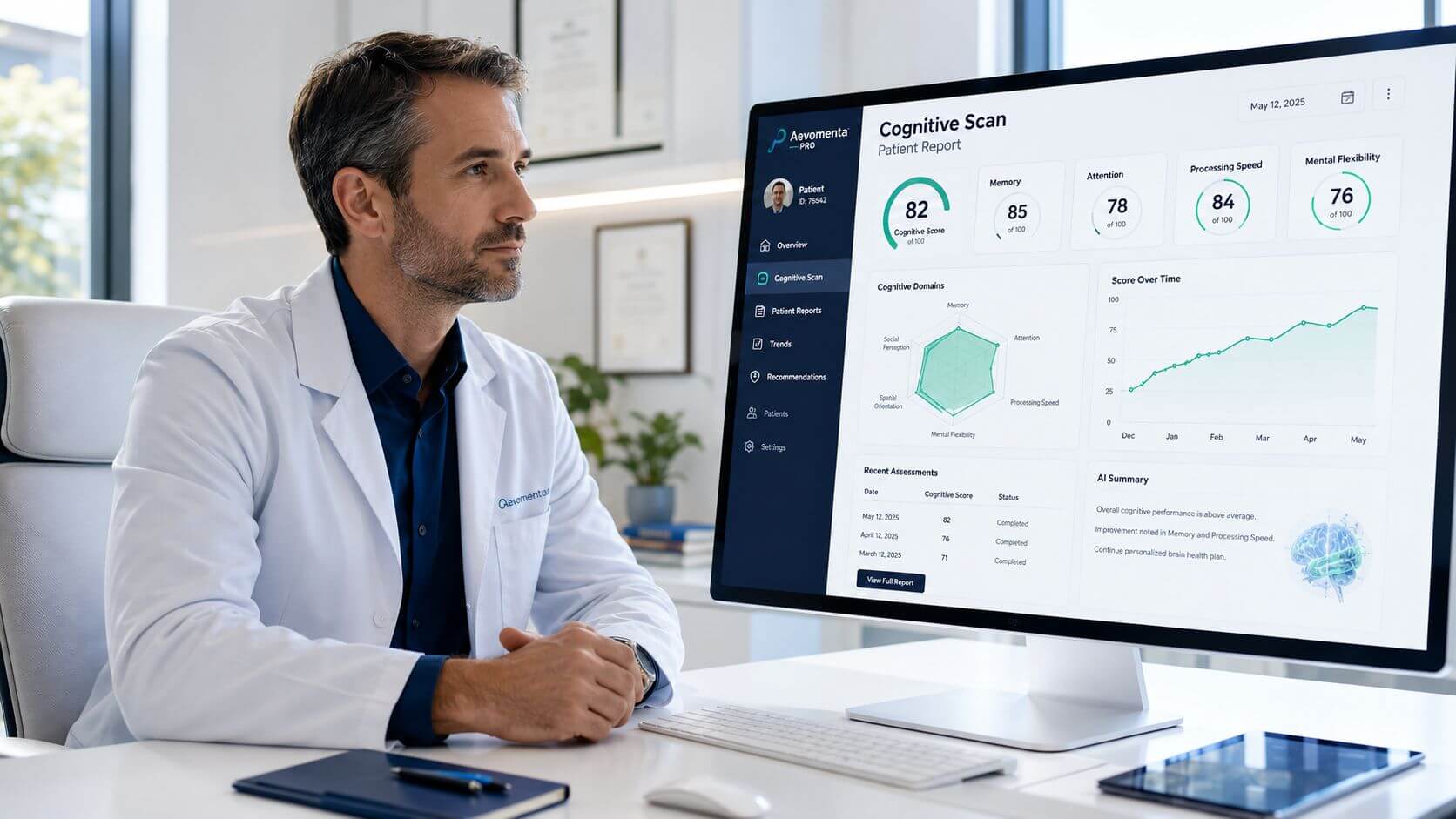
Aevomenta Pro
Structured progress support
A focused workspace for authorized coaches and support professionals to assign practice, review user-shared descriptive progress, and keep follow-up consistent.
- ✓ Practice assignments and follow-up sessions
- ✓ Descriptive completion and personal-progress summaries
- ✓ Consent-scoped support for individuals or groups
Research Context and Design Sources (68)
Explore 68 linked sources that provide research and design context for cognitive tasks, adaptation, accessibility, and digital measurement. This library does not by itself prove a health outcome from Aevomenta.
1. ACTIVE Study: overall design and main results
Tennstedt, Unverzagt. The ACTIVE Study: Study Overview and Major Findings.
Open URL (PMC3934012) ↗2. ACTIVE: five-year results
Willis et al. Long-term effects of cognitive training on everyday functional outcomes in older adults.
Open URL (PubMed: 17179457) ↗3. ACTIVE: ten years of results
Rebok et al. Ten-Year Effects of the ACTIVE Cognitive Training Trial on Cognition and Everyday Functioning.
Open URL (PMC4055506) ↗4. ACTIVE: twenty-year follow-up (2026)
Coe et al., 2026. Impact of cognitive training on claims-based diagnosed dementia over 20 years.
5. Processing speed and risk of dementia
Edwards et al. Speed of processing training results in lower risk of dementia.
PMC5700828 ↗6. Cognitive training and car accidents
Ball et al. Cognitive Training Decreases Motor Vehicle Collision Involvement of Older Drivers.
PMC3057872 ↗7. IMPACT - classroom-cognitive training
Smith et al. A Cognitive Training Program Based on Principles of Brain Plasticity.
8. FINGER - multi-domain intervention
Ngandu et al. A 2 year multidomain intervention of diet, exercise, cognitive training, and vascular risk monitoring.
9. U.S. POINTER, 2025
Baker et al. Structured vs Self-Guided Multidomain Lifestyle Interventions for Global Cognitive Function.
10. ACHIEVE - hearing and cognitive function
Lin et al. Hearing intervention versus health education control to reduce cognitive decline.
PMC10529382 ↗11. AgeWell.de
Zülke et al. A multidomain intervention against cognitive decline in an at-risk population.
PMC10917033 ↗12. Dual n-back
Lawlor-Savage, Goghari. Dual N-Back Working Memory Training in Healthy Adults.
PMC4820261 ↗13. Multiple Object Tracking
Harris et al. Testing the Effects of 3D Multiple Object Tracking Training.
PMC7028766 ↗14. UFOV (Useful Field of View)
Hudak et al. Dynamic Useful Field of View Training to Enhance Older Adults’ Cognitive and Motor Function.
PMC9536469 ↗15. UFOV and driving
Classen et al. Predicting Older Driver On-Road Performance by Means of the Useful Field of View and Trail Making Test.
PMC3750125 ↗16. Multiple Object Tracking in Older Adults
Legault et al. Healthy Older Observers Show Equivalent Perceptual-Cognitive Training Benefits to Young Adults for Multiple Object Tracking.
PMC3674476 ↗17. What does n-back measure with age?
Gajewski et al. What Does the n-Back Task Measure as We Get Older?
PMC6275471 ↗18. N-back training and carry
Pergher et al. N-back training and transfer effects revealed by behavioral responses and EEG.
PMC6236237 ↗19. Cognitive flexibility in older adults
Buitenweg et al. Cognitive Flexibility Training: A Large-Scale Multimodal Adaptive Active-Control Intervention Study.
PMC5701641 ↗20. Task switching training
Gajewski, Falkenstein. Effects of Cognitive, Physical, and Relaxation Training on Cognitive Functions in Older Age.
PMC3349932 ↗21. Go/No-Go: construct validity
Votruba et al. Factor structure, construct validity, and age-related differences in the Parametric Go/No-Go Test.
PMC4040279 ↗22. Stop-Signal Task on the Internet
Poulton et al. Web-Based Independent Versus Laboratory-Based Stop-Signal Task Performance.
PMC9153905 ↗23. Age-related changes in visual working memory
Tas et al. Age-related decline in visual working memory.
PMC7274856 ↗24. Change detection and individual differences
Matsuyoshi et al. Age and individual differences in visual working memory deficit.
PMC4019885 ↗25. Mental rotation and early cognitive changes
Sutnikiene et al. Time/Movement Estimation and Mental Rotation Tasks in Early Alzheimer’s Disease.
PMC12631017 ↗26. Spatial transformations and driving
Tinella et al. Spatial Mental Transformation Skills Discriminate Fitness to Drive.
PMC7745720 ↗27. Episodic Memory - NIH Toolbox
Dikmen et al. Measuring Episodic Memory Across the Lifespan: NIH Toolbox Picture Sequence Memory Test.
PMC4254833 ↗28. Self-administered digital measurement of episodic memory
Young et al. Development and Validation of an Episodic Memory Measure for Mobile Self-Administration.
PMC11309919 ↗29. Memory for faces and names
Rentz et al. Validity and reliability of the Mobile Toolbox Faces and Names test.
PMC11911242 ↗30. Computerized memory for faces
Alegret et al. A computerized version of the Face-Name Associative Memory Exam.
PMC7077028 ↗31. Emotion recognition and age
Visser et al. Emotion Recognition and Aging: Comparing Labeling and Categorization Tasks.
PMC7019034 ↗32. Auditorium-cognitive dual-task training, 2026
Zhao et al. Web-Based Gamified Auditory-Cognitive Dual-Task Training for Older Adults With Age-Related Hearing Loss.
33. NIH Toolbox: Executive Functions
Zelazo et al. Validation of Executive Function Measures in Adults.
PMC4601803 ↗34. NIH Toolbox Demographically Adjusted Norms
Casaletto et al. Demographically Corrected Normative Standards for the English Version of the NIH Toolbox Cognition Battery.
PMC4490030 ↗35. NIH Toolbox Version 3: updated norming (2025)
Ho et al., 2025. Norming of the NIH Toolbox Cognition Battery Version 3.
PMC12879375 ↗36. Reliability of cognitive composites
Heaton et al. Reliability and Validity of Composite Scores from the NIH Toolbox Cognition Battery.
PMC4103963 ↗37. Validity of individual cognitive domains
Ott et al. Construct Validity of the NIH Toolbox Cognitive Domains.
PMC10468104 ↗38. Comparison of algorithms for counting performance tests
Shono et al. A Comparison of Scoring Algorithms for the NIH Toolbox Executive Function Tests.
PMC11841212 ↗39. Home and laboratory testing of older adults
Cyr et al. Web-Based Cognitive Testing of Older Adults in Person Versus at Home.
PMC8081157 ↗40. Modern browser battery OCTAL (2026)
Zhao et al., 2026. Remote digital cognitive assessment for aging and dementia research.
PMC12909784 ↗41. Reliability of fully remote mobile testing (2025)
Huynh et al., 2025. Reliability of remote self-administered digital cognitive assessment.
PMC12267269 ↗42. Self-testing for people at risk of cognitive decline
Tsoy et al. Self-Administered Cognitive Testing by Older Adults At-Risk for Cognitive Decline.
PMC7837058 ↗43. MyCog Mobile
Young et al. Remote Self-Administration of Cognitive Screeners for Older Primary Care Patients.
PMC10882476 ↗44. Results vary by device
Passell et al. Cognitive test scores vary with choice of personal digital device.
PMC8568735 ↗45. Factors affecting simple reaction time
Woods et al. Factors influencing the latency of simple reaction time.
PMC4374455 ↗46. Methodological problems of online testing
Holden et al. Methodological Problems With Online Concussion Testing.
PMC7559397 ↗47. Mayo Normative Studies
Karstens et al. Mayo Normative Studies: Regression-Based Normative Data for Older Adults.
PMC11014770 ↗48. Regression norms for remote testing (2024)
Stricker et al., 2024. Regression-based normative data for remote self-administered cognitive testing.
PMC11451624 ↗49. Regression T-scores on a large sample
Stricker et al. Regression-Based Normative Data for the Auditory Verbal Learning Test.
PMC7895855 ↗50. Fundamentals of Reliable Change
Duff. Evidence-Based Indicators of Neuropsychological Change.
PMC3499091 ↗51. Reliable Change and Practical Effect
Gavett et al. Reliable change on neuropsychological tests in the Uniform Data Set.
PMC4860819 ↗52. RCI and standardized regression indicators
Busch et al. Reliable Change Indices and Standardized Regression-Based Change Score Norms.
PMC4475419 ↗53. Testing annual change methods
Hammers et al. Validating 1-Year Reliable Change Methods.
PMC7809650 ↗54. Adaptive Measurement of Cognitive Function (2024)
Gibbons et al., 2024. Adaptive measurement of cognitive function based on multidimensional item response theory.
PMC11694520 ↗55. QUEST+ - adaptive threshold estimation
Paire et al. Empirical validation of QUEST+ in PSE and JND estimation.
PMC10700427 ↗56. QUEST+ in JavaScript
Kuroki. jsQuestPlus: A JavaScript implementation of the QUEST+ method.
PMC9450820 ↗57. Comparison of staircase algorithms
Karmali et al. Determining thresholds using adaptive procedures and psychometric fits.
PMC4831214 ↗58. Following a long-term cognitive program
Turunen et al. Computer-based cognitive training for older adults at risk for dementia.
PMC6620011 ↗59. Tablet Training Compliance Factors (2025)
Sugimoto et al., 2025. Factors associated with adherence to tablet-based cognitive training.
PMC11891571 ↗60. Gamification and support partner (2024)
Greysen et al., 2024. Effect of gamification with a support partner.
PMC11350015 ↗61. Collaborative application design with users (2026)
Co-Designing a Digital Brain Health Intervention for Older Adults and Carers, 2026.
PubMed: 41972835 ↗62. Standards for Educational and Psychological Testing (2014)
AERA, APA, NCME Standards Overview.
63. International Test Commission (ITC) Guidelines
ITC Guidelines on Computer-Based and Internet Delivered Testing.
Official PDF ITC ↗64. WCAG 2.2 - Web Accessibility Standard
W3C Web Content Accessibility Guidelines 2.2.
65. IMDRF: Software as a Medical Device — Clinical Evaluation
International Medical Device Regulators Forum SaMD N41.
IMDRF Document ↗66. FDA: Software as a Medical Device (SaMD)
U.S. FDA Digital Health Center of Excellence Guidance.
FDA SaMD Section ↗67. FDA Clinical Decision Support Guidance (2026)
FDA Clinical Decision Support Software Guidance for Industry.
FDA CDS Guidance ↗68. MDCG European Medical Software Guide (2020-1)
MDCG Guidance on Clinical Evaluation of Medical Device Software.
Official EU PDF ↗So that age changes numbers, not opportunities.
Start with an 8-minute descriptive Aevomenta Scan and establish your personal performance baseline.
Aevomenta Scan describes performance inside the exercises and compares it with your own baseline. It does not provide a diagnosis or clinical norm.